







The United Arab Emirates’ Departure From OPEC Transforms the Global Oil Landscape
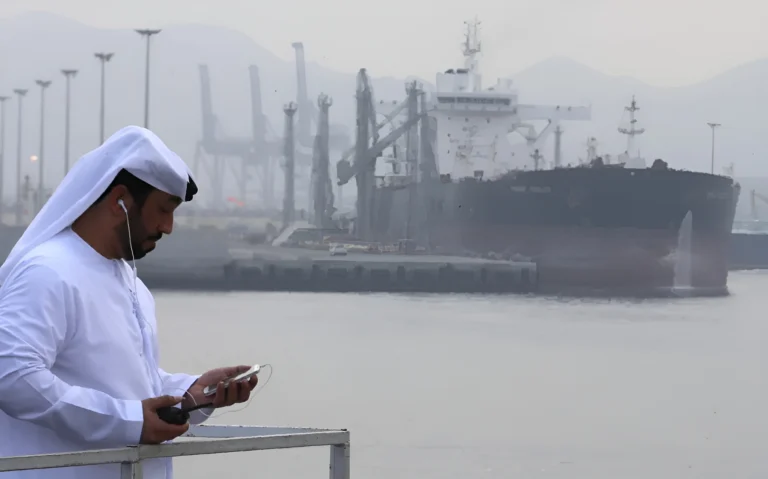
A person at a port in the UAE. Photo: X @ahramonline
April 29, 2026 Hour: 2:52 pm
🔗 Comparte este artículo
The UAE pivots toward a high-tech, autonomous future by prioritizing national production capacity.
The global energy landscape underwent a significant transformation on April 28, 2026, when the United Arab Emirates (UAE) officially announced its withdrawal from the Organization of the Petroleum Exporting Countries (OPEC).
RELATED:
United Arab Emirates Exits From OPEC and OPEC+
This historic decision, effective May 1, 2026, marks the conclusion of over 58 years of Emirati membership in the influential oil cartel. Analysts are describing this move not merely as a commercial shift, but as a geopolitical “earthquake” that fundamentally redefines power dynamics within the energy market.
The UAE’s exit is driven by a desire for national autonomy and a need to maximize oil production, goals that were often hindered by the group’s restrictive production quotas.
The UAE’s strategic decision to exit the bloc is driven by the objective of monetizing its substantial investments in production capacity. This move is anticipated to be informed by the imminent global energy transition, which is expected to diminish the long-term value of fossil fuels.
This withdrawal represents a symbolic and functional blow to OPEC’s cohesion, signaling a potential end to the era of unified oil-bloc dominance over global prices.
The UAE in OPEC: From Sovereignty to Strategic Leadership
The relationship between the Emirates and OPEC actually predates the formation of the UAE as a unified state. The Emirate of Abu Dhabi joined the organization in 1967, four years before the federation of the seven emirates was established.
At that time, joining OPEC was a strategic move to gain sovereignty over natural resources and break free from British colonial influence, aligning with the vision of other nations like Venezuela and Iraq.
Following the official establishment of the United Arab Emirates in 1971, the new state formally assumed membership of the group and rapidly evolved into one of its most technically advanced and stable pillars.
For almost six decades, the UAE has been an active member of the bloc, during which time it has become recognized as the “architect of moderation”. Its contributions were defined by three critical roles.
Firstly, it became OPEC’s third-largest producer, surpassed only by Saudi Arabia and Iraq. It is important to note that the UAE maintained significant “spare capacity”, which enabled it to function as a “central bank of oil”.
Beyond its role in production, the UAE played a pivotal diplomatic mediating function. It reliably served as a conduit between members of a more aggressive persuasion, who were demanding elevated prices, and those of a more pragmatic disposition.
The UAE was also a key supporter of the OPEC+ alliance, which integrated Russia into the group’s strategy in 2016. In recent years, the UAE has assumed a leadership position in the energy transition.
Despite its status as a major oil exporter, the country has strategically leveraged its influential position to encourage fellow petro-states to invest in renewable energy and low-carbon technologies. This commitment is underscored by its role as host of the 2023 COP28 summit.
Geopolitical Instability and Strategic Realignment in 2026
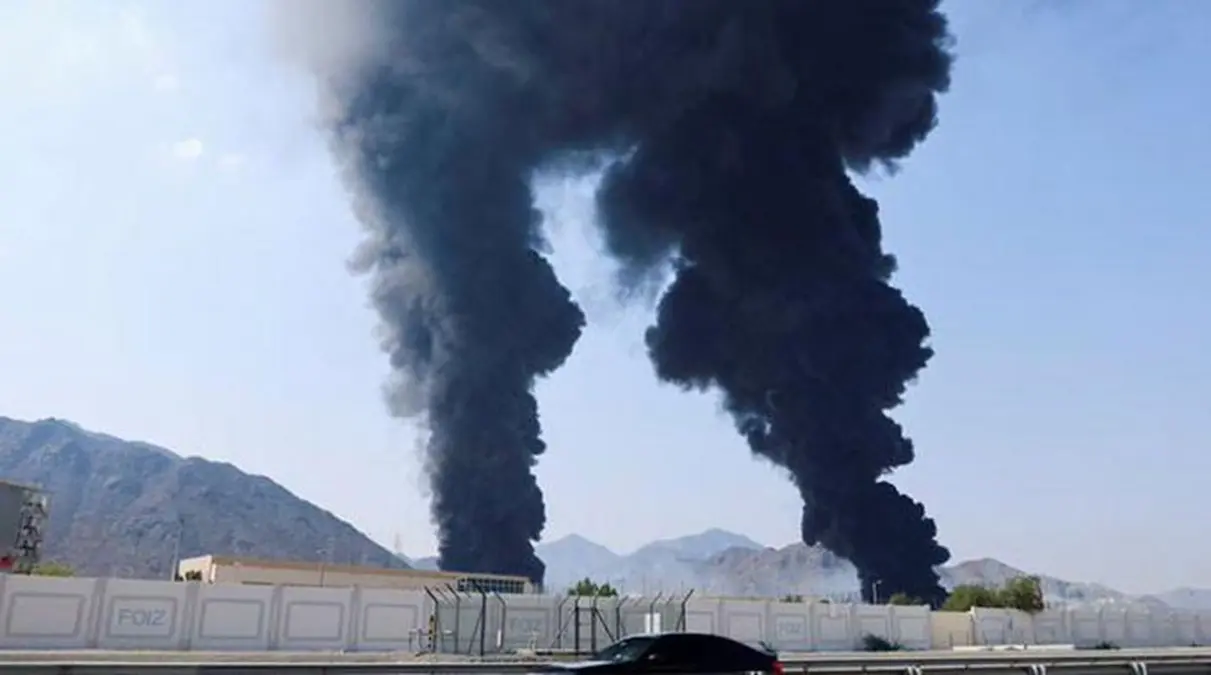
The UAE’s decision to exit OPEC coincides with a period of intense regional and global volatility. The 2026 conflict between Israel-U.S. and Iran, in combination with ongoing instability in the Strait of Hormuz, has directly threatened the security of Emirati oil exports.
As a maritime nation dependent on safe passage through these narrow waters, Abu Dhabi has prioritized the ability to manage its own production and export schedules without being bound by the collective decision-making of a cartel that may have different security priorities.
Concurrently, the global energy market is undergoing a substantial shift in its balance of power. The resurgence of U.S. oil production and the growth of non-OPEC producers such as Brazil and Guyana have challenged the cartel’s ability to set global prices.
This environment has encouraged a strategic rapprochement between the UAE and the United States. Under the Trump administration, the two nations have secured landmark agreements totaling $440 billion, focusing on semiconductor technology, artificial intelligence, and energy infrastructure.
The Driving Forces Behind the Emirati “Divorce”
The primary motivation behind the UAE’s withdrawal is the fundamental discrepancy between national investment and OPEC’s production quotas. Over the past several years, Abu Dhabi has invested approximately $150 billion in its national oil company, ADNOC, with the aim of increasing production capacity to 5 million barrels per day by 2027.
However, OPEC’s strategy of curtailing supply to maintain high prices effectively “locked in” these investments, thereby preventing the UAE from selling the volume of oil it was now capable of producing. From a sovereign perspective, these caps were viewed as increasingly detrimental to national development.
Furthermore, the UAE is operating with a sense of urgency regarding the global energy transition. Government officials recognize that the long-term demand for fossil fuels will eventually decline as the world moves towards renewable energy.
In order to fund its ambitious “Vision 2031” and “Net Zero 2050” initiatives, which include significant investments in AI and green hydrogen, the country needs to maximize oil revenues now. By producing at full capacity today, the UAE can generate the capital required to build a diversified, high-tech economy that is not reliant on crude oil in the future.
Global Reactions: A World Divided on the UAE’s Exit
The international community has responded to the UAE’s withdrawal with a mixture of support, concern, and strategic calculation. Those in favor of the move primarily include market pragmatists and Western economic analysts.
These groups view the exit as a positive step toward a more competitive and transparent oil market. Financial analysts suggest that an “independent” UAE could provide a necessary counterbalance to OPEC’s price-setting power, potentially leading to more predictable energy costs for importing nations.
In contrast, the “stability bloc”, comprising the OPEC Secretariat and traditionalist producing nations, has expressed significant concern. For OPEC, the loss of a member representing 12% of its total output is a significant blow to its collective bargaining power.
Countries such as Iraq and Kuwait are concerned that without the UAE’s cooperation in production cuts, there is a risk of a “race for market share,” which could result in price declines and economic instability for countries that are heavily reliant on crude oil revenues.
In contrast, nations such as Venezuela and Iran have expressed support for the move, viewing it as a victory for U.S. foreign policy. They argue that it weakens the sovereign unity of the Arab world and the collective influence of the Global South.
The Emirati Minister of Energy, Suhail al-Mazrouei, has characterized the departure as a “sovereign and professional adjustment” to the realities of the 21st century. He has emphasized that the UAE will continue to be a responsible global supplier while operating independently of the cartel.
In response, OPEC Secretary General Haitham al-Ghais has defended the organization’s model, stating that global energy stability is best achieved through unity rather than individual flexibility.
Reconfiguring the Global Energy Map
The United Arab Emirates’ withdrawal from OPEC signifies a pivotal moment in the evolution of the global energy landscape. By choosing national interest and long-term economic diversification over the traditional security of the oil cartel, Abu Dhabi has signaled that the era of monolithic price control is fading.
This decision is indicative of a broader global shift, where the emergence of new energy producers and technological advancements is challenging the established order of the 1960s.
In the short term, the OPEP+ alliance remains a potent force, particularly through the partnership between Saudi Arabia and Russia. However, the loss of its most technologically ambitious and diplomatically moderate member will undoubtedly leave the organization significantly more fragile.
Sources: Al Jazeera – La Republica – BBC – RFI – El Grand Continent – Euro News – Swiss Info – El Economista – France 24 – El Correo del Golfo – El País – Banca y Negocios – teleSUR
Author: Silvana Solano
Source: teleSUR